Fulbright Statement of Grant Purpose
Sierra Iola DeVuyst, Colombia, Geociencias y Medio Ambiente
Exploring the Stories, Policies and Science of Climate Resilience through Paintings
Suburban sprawl, isolation, imperialism, car-centric infrastructure and environmental degradation are all intricately interwoven in today’s global system. As our world faces an unprecedented convergence of challenges- depleting water resources, population sprawl, alternative energy needs, and declining mental health- it is too easy to be over inundated with the bulk of change needed. Many people find themselves falling into, as the fossil fuel industry promotes, “cynical fatalism,” designed to protect the status quo of fossil fuel extraction.
NASA has postulated, “global climate change is not a future problem.” Referencing how more frequent wildfires, longer periods of drought, increases in wind intensity and rainfall from tropical storm cycles impact changes. “The magnitude and rate of climate change and associated risks depend strongly on near-term mitigation and adaptation actions, and projected adverse impacts and related losses and damages escalate with every increment of global warming.”
Car-centric infrastructure currently plagues the United States, with many Americans being ignorant of the benefits of people-centric cities. Sprawl has many deleterious effects: less gene-transfer within meta populations making entire species less resilient to evolutionary pressures; the exorbitant cost of asphalt and concrete and its endless upkeep; the necessity for increased energy consumption to power the same people sprawled in a suburb compared to in a city block; and the independent reliance on fossil fuels make our current infrastructure susceptible to poor outcomes as the world changes. Car-focused infrastructure is also known to reduce physical activity, social contacts, children’s play and mental well-being (Mindell & Karlson, 2012), as well as increase heat island effects. “Concentrations of concrete and black tarmac roads in such areas absorb the sun’s heat and then radiate it back out, keeping cities hotter even after sunset”, according to the United Nations Environmental Program (UNEP).
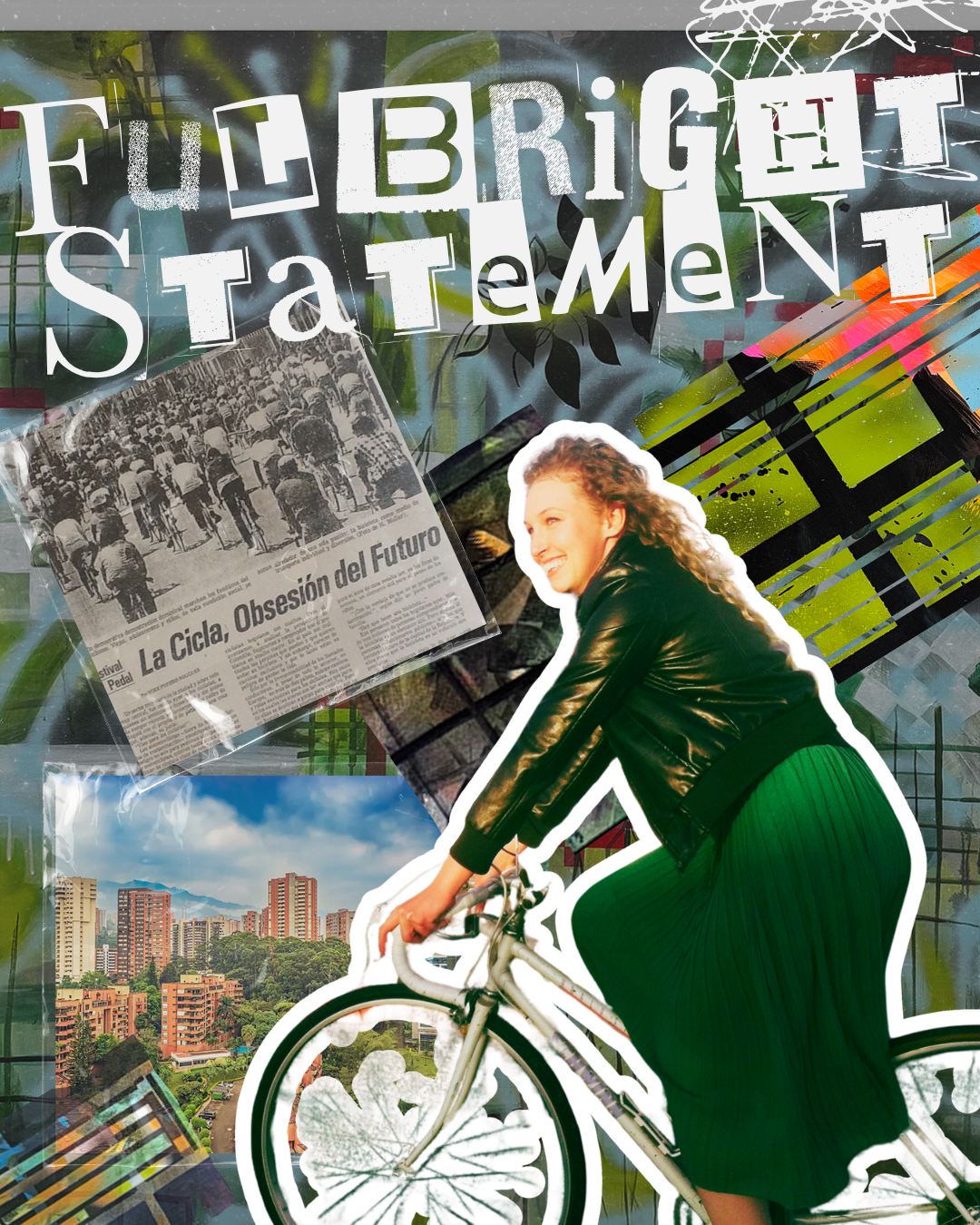
I first became interested in Colombia when I was cycling in Seattle, Washington, with friends when the topic of anti-car and bike-friendly infrastructure came up. A friend mentioned the Ciclovía, a weekly bike parade that shuts down major roadways typically congested with cars transforming it into waves of bikes flooding the streets of Bogota. The Ciclovía began as “La Gran Manifestación del Pedal” during the oil crisis in the 70’s when the reliance on fossil fuels made it clear that dependence on oil can stagnate an economy or infrastructure. Colombia has announced ambitious emission cuts, as well as other policy commitments to climate resilience, including 0 net deforestation by 2030. Colombia is a leading country on nature-based solutions, like Medellín’s implementation of the Green Corridors project which has expanded urban forests and green infrastructure, helping to decrease the heat island effect and resulting in a 2 C/3.6 F reduction in ambient air temperature.
My previous academic experience was focused on biochemistry for medicine, but then evolved to history, policy science communication, where I discovered art and painting. Painting has allowed the combination of focuses that include political science, biology and anthropology in the technical field of painting. Jeanette Winterson once wrote, “What art does is
coax us away from the mechanical and toward the miraculous. The so-called uselessness of art is a clue to its transforming power. Art is not part of the machine. Art asks us to think differently, see differently, hear differently and ultimately act differently, which is why art has moral force.”
I will be working with Iván Sarmiento Ordosgoitia, a research director for the Transportation Engineering Department at the National University of Colombia- Medellin (UNAL) as well as Connie Paola López Gómez, a professor in UNAL’s Department of Geosciences and Environment, to participate and listen to transportation engineers and their concerns, as well as gain a historical understanding of the cultural shifts that supported the ambitious policy changes helping to reduce heat island effects in the city. I also hope to better my understanding of cultural resistance to bikes and the green corridors initiative. I plan to work with scientists and science students at UNAL to create and print zines that will be informative, poetic and visually appealing, while also being bilingual. I will invite scientists, artists and poets from Colombia and the United States to contribute and will do the translation work to make the book accessible in both English and Spanish. Not only will it be available in both languages, but it will mirror bilingual children’s books, which will help broaden the audience, be entertaining for adults and help expand language acquisition materials that can facilitate better cultural exchanges within the Spanish and English speaking world at large.
The first two months I will focus on research through interviews, literature reviews and drafting sketches while building connections with the community. The following months I will work on producing zines and make 5 paintings every month. By the last month I will have 30 paintings, 7 zines and have completed an artist talk about combining science and art for the purpose of public outreach and understanding. The 30 paintings and the zines will communicate Colombia’s initiative to climate change resilience, cultural shifts in perceptions about fossil fuel and transportation changes that help fight erosion, asphalt-exacerbated poor water quality and heat island effects. This series will travel throughout Colombia and the United States focused within free public spaces, like public university art galleries, free art museums, city council buildings and public libraries. This will help strengthen the relationship between Colombia and the United States while promoting art and science, while giving due recognition to Colombia’s ambitious policies that U.S. cities could and should emulate. My artistic influences include Philip Guston, Omar Ba, and Eva Struble. I strive to embody Guston’s sardonic style and narrative alongside Ba’s keen political understanding and Eva Struble’s environmentally-focused work.
My goal is to elevate the perception of Colombia and their policies that more cities and countries should begin emulating. I would like to help U.S. citizens recognize the move to sustainable infrastructure is imperative for the well-being of individuals, global peace and the future stability of the planet. After completing one of the most important endeavors in my life, I hope to attend the MFA program at Yale, where I will continue my Fulbright project by focusing on bringing science and anthropology together through painting. I plan to keep my studio practice while becoming a multi-disciplinary professor that helps fuse art and science that creates a foundational understanding of creative problem solving for clear communication.